
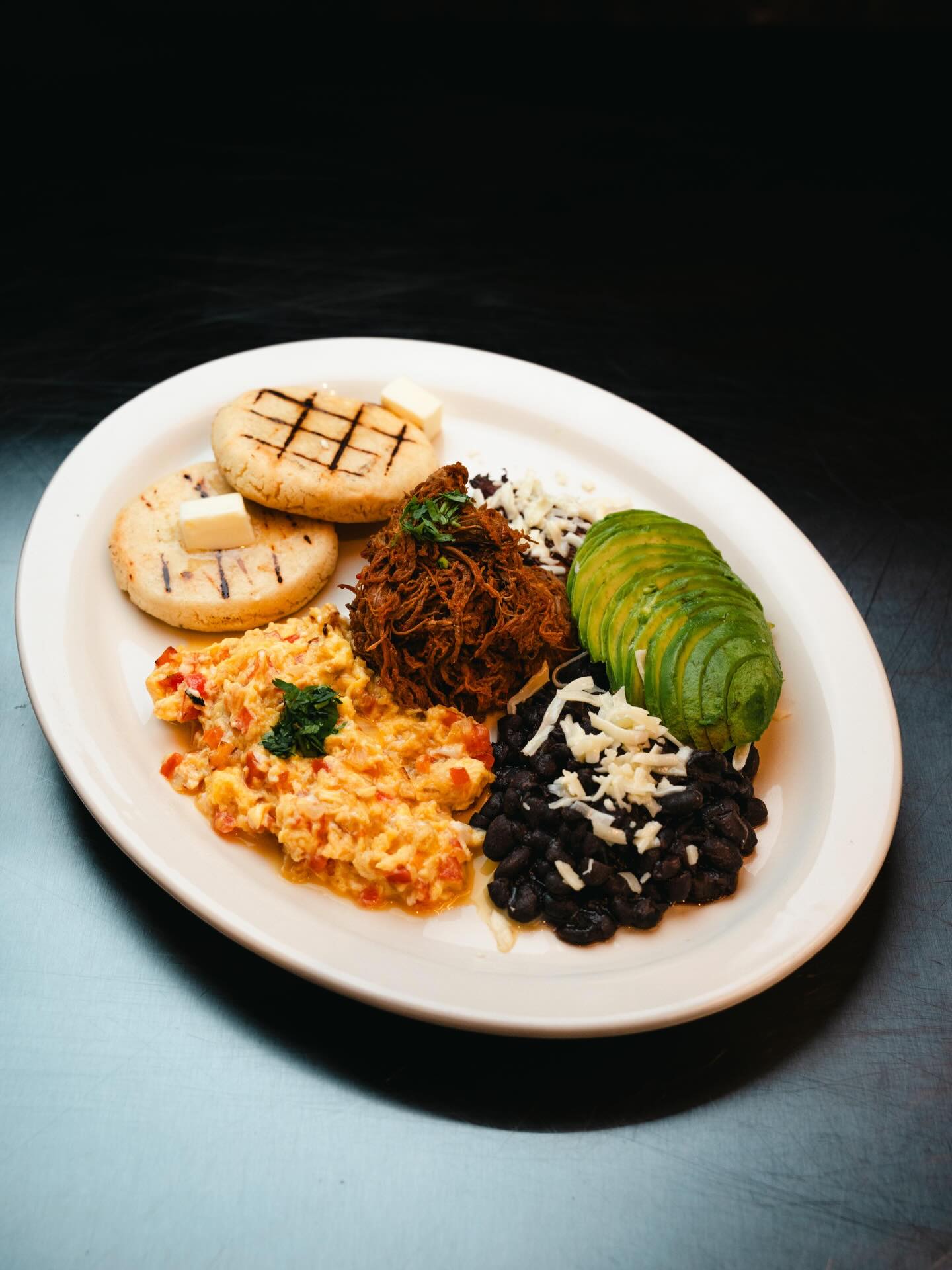
o a Venezuelan, the arepa is more than just food. It is the heartbeat of the kitchen, the ultimate comfort, and a symbol of national identity that transcends borders. If you have ever been lucky enough to bite into a perfectly prepared arepa—warm, slightly crispy, and filled with a savory surprise—you know exactly why this simple cornmeal cake has captured the hearts of people around the world.
But what exactly is the “magic” behind the arepa? Why does this simple disc of dough carry so much weight in Venezuelan culture?
The Perfect Texture: A Study in Contrasts
At its core, the arepa is a humble creation: cornmeal, water, and salt. Yet, the brilliance lies in the preparation. The iconic Venezuelan arepa is defined by a specific texture: the crunch-to-soft ratio.
When prepared properly—usually cooked on a budare (a flat, circular griddle)—the exterior forms a thin, golden, crispy shell, while the inside remains pillowy and soft. It provides the perfect structural integrity to hold hot, heavy, and juicy fillings without falling apart, yet it yields easily to the first bite.
The Canvas of Creativity
If the sandwich is a vessel, the arepa is a canvas. Because the dough itself is relatively neutral, it acts as the perfect vehicle for any flavor profile imaginable. In Venezuela, the arepa is eaten at any time of day—breakfast, lunch, dinner, or as a late-night snack.
This versatility has led to a culinary culture where the “fillings” are elevated to an art form. Every Venezuelan arepera (a restaurant specializing in arepas) has a menu that reads like a greatest hits of national flavors.
The Legendary “Rellenas”
You cannot talk about arepas without mentioning the famous “rellenas” (stuffed arepas). These aren’t just snacks; they are hearty, full-course meals packed into a corn pocket. Here are a few that have achieved legendary status:
- Reina Pepiada: Perhaps the most famous of all. It is a creamy, decadent mix of shredded chicken, avocado, mayonnaise, and sometimes peas or onion. It was created in honor of the 1955 Miss World, Susana Duijm.
- Pelúa: A savory combination of shredded beef and shredded yellow cheese (queso amarillo). The name means “hairy,” referring to the long, shredded textures of the meat and cheese.
- Domino: A vegetarian classic, featuring the contrasting flavors of savory black beans (caraotas) and salty white cheese (queso blanco).
- Catira: Shredded chicken and yellow cheese, a crowd-pleaser for those who want something simple yet satisfying.
More Than a Meal: A Cultural Connection
The arepa is the “daily bread” of Venezuela. It is a unifying force. Whether you are in a high-end restaurant in Caracas or a bustling street stall in Miami, the arepa connects Venezuelans to their heritage.
Preparing arepas is a communal act. It is often one of the first things a child learns to cook with their parents, gathering around the bowl to mix the dough with their hands. There is a tactile intimacy to it—you have to “feel” the dough to know when it’s ready, adding water or flour until it reaches that perfect, smooth consistency that doesn’t stick to your fingers.
Why You Should Try One
If you have never experienced an authentic Venezuelan arepa, you are missing out on one of the great comfort foods of the world. It is a dish that manages to be both rustic and refined, satisfying and light, traditional and endlessly innovative.
Next time you see a Venezuelan spot in your city, don’t walk past it. Order an arepa, preferably one with a little bit of cheese or avocado, and take a bite. You’ll understand immediately why this simple corn cake is, and always will be, the true soul of Venezuela.